
We need a new story part 5
Diversity?


The “story” we all hear today is that “Diversity” is good. But what does that mean? No one explains the term. Let’s go to the natural world for guidance.
There is no doubt that a “Climax Forest” is very diverse and is as a result stable. Every part has a relationship with others and the mix itself produces value that a simple structure can never replicate.
I wonder, is this what people mean when they claim that Diversity is a good thing?
Let’s test this by seeing what can damage such a system.
With a large enough system, natural cataclysms can be sustained. Major fires, floods etc. Even Volcanic eruptions.
Small incursions of novel species can be coped with. These novelties adapt, find a place or die. The result is that stability and coherence at a system level is maintained.
The reason for this is that the system, as a system, always trends towards balance.
What is truly disruptive are novel species that upset this balance and so distort a large number of relationships in the system leading to weakness or, in worst cases, collapse.
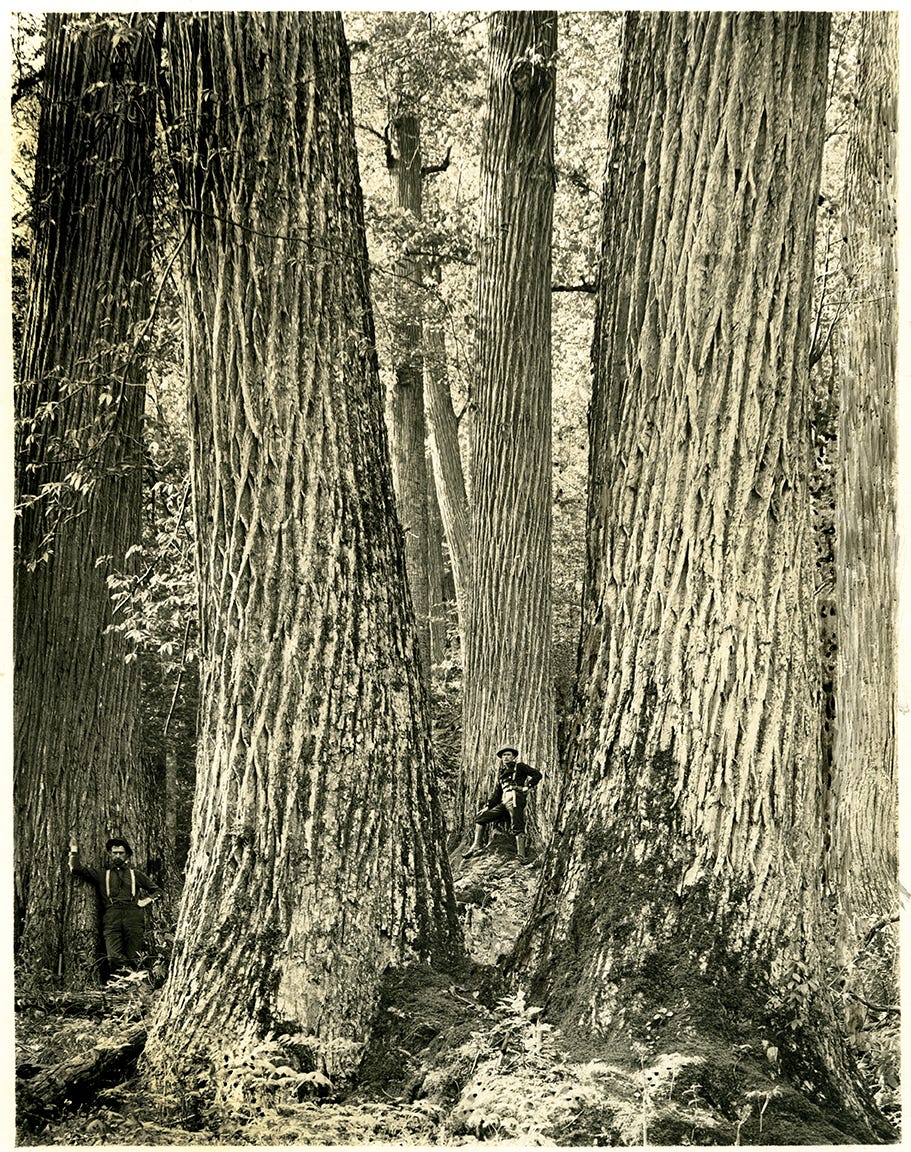
In the early 1900s, the Chestnut Blight was accidentally introduced to North America from imported Asian chestnut trees. The blight quickly spread through the American Chestnut population, killing an estimated 3 to 4 billion trees within just a few decades. The disease creates cankers on the tree's trunk, essentially girdling the tree and cutting off its nutrient supply.
The Blight had adapted to its native forest in Asia. There was a balance set there. But its sudden arrival in a new environment, that had no natural resistance, led to collapse.
The rapid and nearly complete loss of the American Chestnut had far-reaching effects on the forest ecosystems of the eastern U.S. Many animal species lost a major food source, and the overall structure of the forest was altered.
Human Systems
These system rules apply to humans as well. Diseases can be adapted for or not.
Europe had been an urban culture for thousands of years. A product of urban culture are diseases that thrive in concentrated populations, such as small pox. When these plagues first arrived in Europe, they devastated populations. But over time, evolution created more of a balance. Basically, those who survived were granted increasing immunity. Over many generations, this population immunity grew. The result was that a balance between the disease and the host was created.
But, when Europeans arrived in North America, the local populations had no defence against the European diseases. It is estimated that about 50 million people died in the first 100 years since first contact.
The systemic issue then was the same as the Chestnut situation.
Human Culture
Until now, we have been talking about vectors for disease. But in the human domain, culture also acts like disease. Cultures spread in the same way and they have the same cycle of disruption leading to balance.
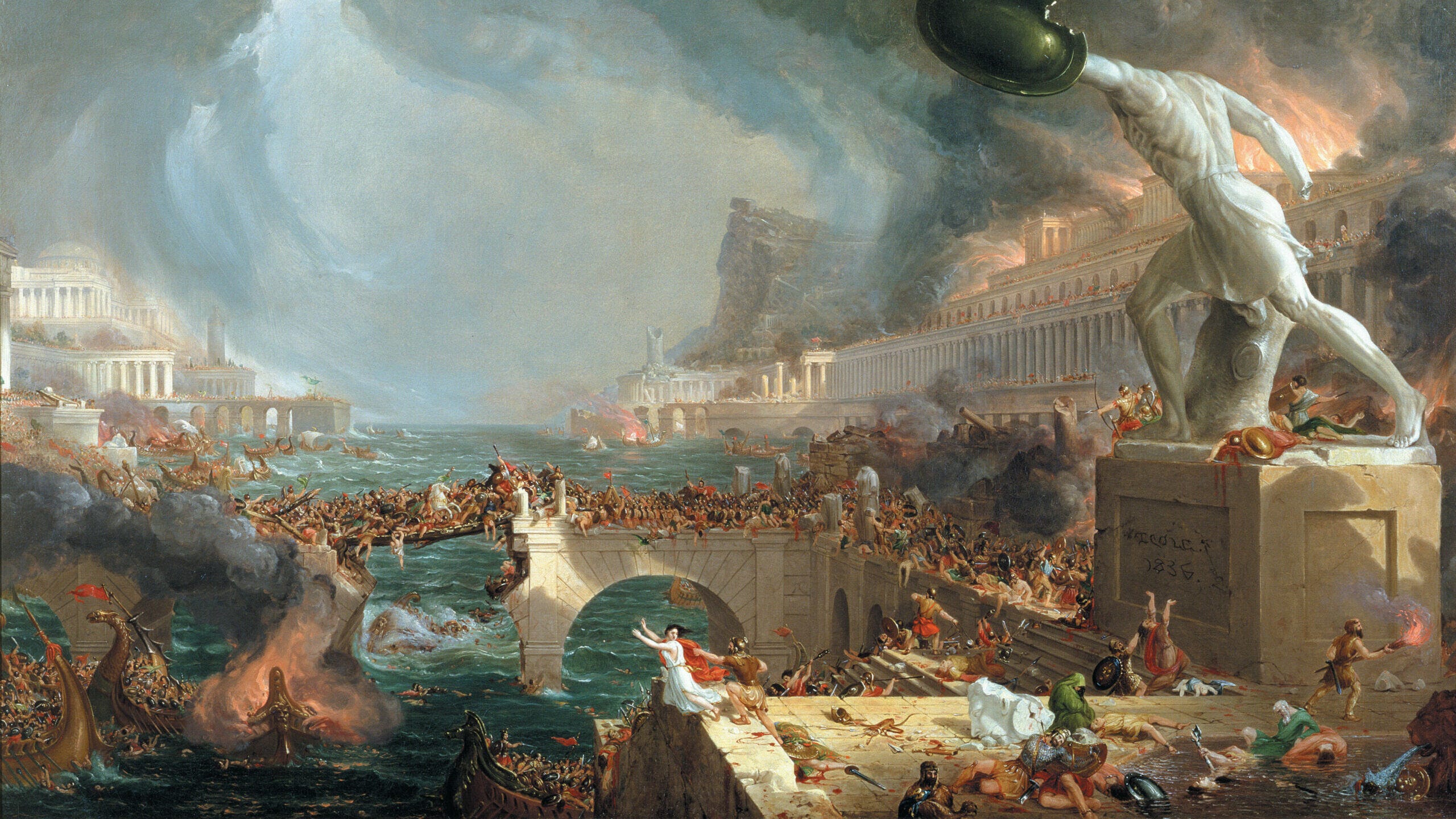
Core to human culture are religions. The rise of Christianity parallels the trajectory of any disease. The Roman Empire in the west was socially undermined by the early struggle phase of this new religion that swept all the old religions away. This loss of coherence in Roman society made it vulnerable to external threats that it had been able to cope with in the past.
The invaders also carried with them a significant other cultural novelty. They were nomadic pastoralists. The Roman Empire was intensely urban. Mass urban life was an anathema to the invaders.
In 100 years, the essence of Rome had collapsed.
Modern Times - A Religious Vacuum?
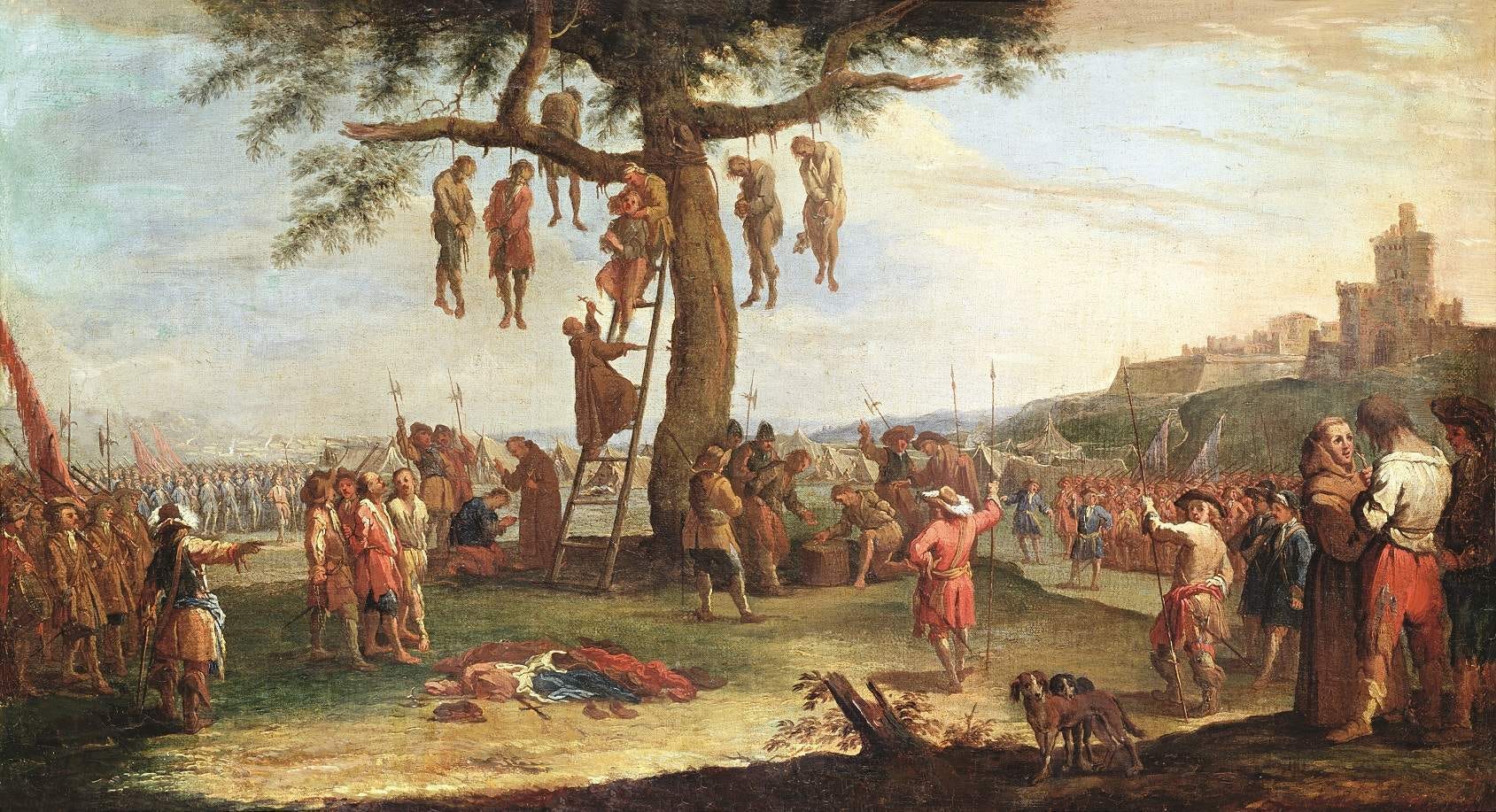
In 1648, the Peace of Westphalia ended 150 years of intense Religious warfare.
The root cause of this had been the advent of a new religion, Protestantism. This novel religion had led to brutal conflict for nearly two centuries.
In 1648, Europeans had had enough of religious warfare. A cultural balance grew as a result.
Over the next 200 years, wars continued but not based on religious grounds. Religion remained important but its grip on the core of how Europeans defined themselves was lessened and later, broken.
Possibly as a result of World War I, the hold that religion had on Europeans weakened. Leading to the advent of secular religions such as National Socialism and Communism. The advent of these new religions had the predictable consequences of nearly 100 years of conflict. Capitalism and Democracy won this in the late 1980’s.
I talk about this rise of “Secular Religions” in this post.
But, now we see the advent of a new religious conflict.
On one side, the European west is divided between a traditional culture and a new culture based on an ideology. There is no compromise between these parties.
As Europe and European North America is split, as was Rome in the 4th Century, a new and very coherent old religion, Islam is spreading via mass migration. This mass migration that brings with it a contradictory way of life to the European norms, is being welcomed by the new ideology. The banner is “Diversity”.
History and Nature remind us that the process of seeking a balance again will be turbulent at best.
“Diversity” is offered as an assumed value. But nature and history suggest that novelty threatens the stability of systems.
In our next post we will discuss where diversity has great value, in teams that have different viewpoints in thinking. We will also look at the value of social coherence.